
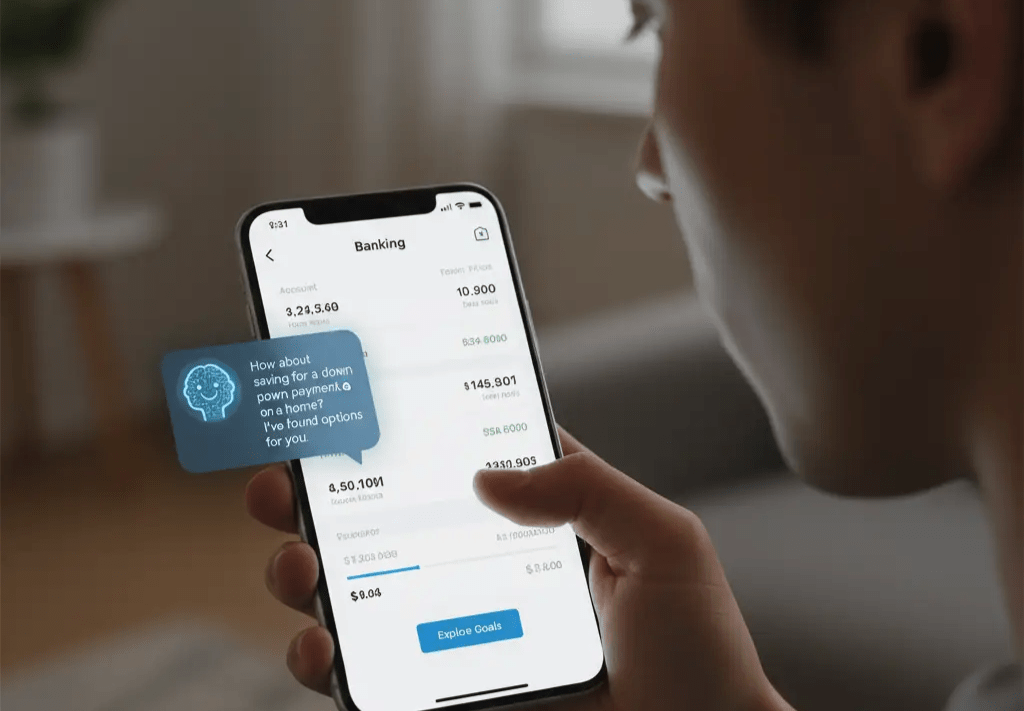
Imagine your bank quietly knowing what you need before you even ask. That’s not science fiction — it’s the emerging world of “smart banking,” where technology makes finance personal, predictive, and almost invisible in your everyday life.
What Makes Banking “Smart”?
“Smart banking” isn’t about a new app or a fancy dashboard. It’s a mindset shift. It means your financial experience becomes adaptive — shaped by data, automation, and artificial intelligence that work together in the background to simplify decisions for you.
Instead of manually checking your balance or setting reminders to pay bills, your app could already know your patterns and suggest the best next move in plain language. It’s banking that thinks along with you, not after you.
AI as Your Financial Co-Pilot
AI in banking goes far beyond chatbots. Machine learning systems now detect unusual spending, recommend savings plans, and even forecast your upcoming expenses in a way that feels like a helpful co-pilot, not a spreadsheet.
For example, if your rent and subscriptions usually leave your account at the start of the month, your app can predict how much you’ll have left and propose to move part of it to a high-yield savings account — automatically, before you’re tempted to spend it.
According to industry reports, over 60% of digital-banking users say they would trust AI to help them plan their finances, provided transparency and privacy are guaranteed — in other words, as long as they still feel in control.
From Mobile Banking to Smart Ecosystems
Today’s neobanks already use smart algorithms to personalize offers. But the next leap is ecosystem integration: your bank connects with your smart home, your car, your subscriptions — even your wearable.
Imagine your watch alerting you that your fitness app subscription is due and suggesting a cheaper plan — all triggered by your financial assistant. That’s the level of seamlessness smart banking is moving toward: less admin for you, more quiet coordination between the tools you already use.
Privacy, Trust, and Control
For all its promise, smart banking raises real concerns. The smarter the system, the more data it uses. That’s why top neobanks and traditional institutions alike are investing heavily in transparent data policies and user consent frameworks that you can actually understand.
In the end, smart banking should feel empowering — not invasive. You should always be able to see, edit, and revoke how your data shapes the recommendations you receive, without digging through dark-pattern menus or legalese.
How It Changes Your Everyday Banking
Smart banking will likely mean:
- No more manual transfers — your app automates them based on your spending rhythm and cash-flow habits.
- Predictive alerts — you’re warned before overdraft, not after the painful fee hits.
- Smarter offers — loans, cards, and investments tailored to your real profile, not generic ads blasted to everyone.
- Integrated lifestyle — from digital receipts to sustainability tracking, all in one ecosystem that feels like a single money hub.
In short: less friction, more foresight — and fewer “How did my balance drop so fast?” moments.
The Human Touch Still Matters
Even as algorithms become your financial brain, the heart of banking — trust — remains human. Banks that succeed will be those blending tech precision with empathy: clear explanations, reachable support, and products designed around real-life stress, not just perfect scenarios.
Because users don’t want a robot banker; they want a smarter way to feel secure about their money, with technology as a helpful layer — not a cold replacement for human judgment.ment.