
You tap your phone at the supermarket, split a bill in your wallet app, and send rent with an instant transfer — all without seeing a single banknote. Then, one evening, your landlord, a local market, or a parking machine suddenly wants cash, and you find yourself hunting for the nearest ATM that still works. That tension between a cashless routine and very real cash moments is exactly where the ATM’s future is being decided.
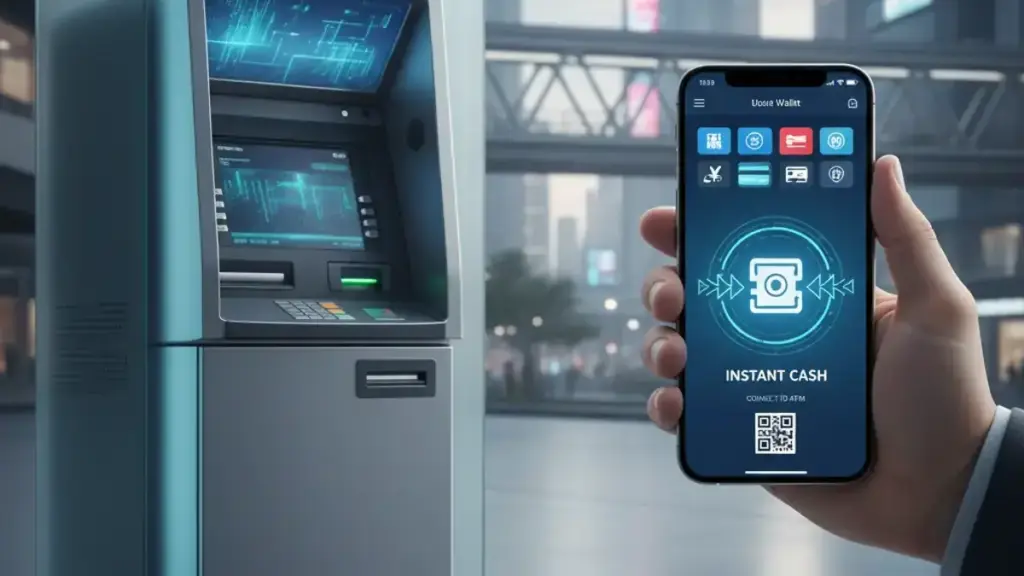
From Symbol of Access to Symbol of Decline
For decades, automated teller machines stood for financial inclusion — the simple promise that you could get your money anytime, anywhere. Today, the story feels different. According to central bank data, ATM usage across Europe and India has dropped by more than 30% over the past five years, while mobile-based withdrawals and QR-enabled transfers are growing at double-digit rates.
What’s changing isn’t just technology — it’s behavior. For many people, cash is no longer a habit; it’s a fallback option you use when all else fails.
Cash Demand Isn’t Dead — It’s Regional
In countries like Sweden or Singapore, you can go weeks without touching a banknote. Yet in Southern Europe, rural India, and many African markets, cash still shapes everyday transactions. Central banks report that about 60% of people in developing economies withdraw cash monthly for small merchants, rent, or wages.
ATMs aren’t disappearing — they’re adapting. Cash recyclers that both dispense and accept deposits, hybrid kiosks that handle wallet top-ups, and machines that support bill payments are becoming the new normal.
The New Face of ATMs: Smart, Slim, and Software-Driven
The next generation of machines looks nothing like the bulky kiosks of the past. Leading manufacturers such as NCR Voyix and Diebold Nixdorf are rolling out cloud-connected, modular devices designed for the world of digital banking. These newer ATMs:
- support cardless access via NFC or QR codes,
- offer multilingual, personalized interfaces,
- enable digital ID verification and bill payments,
- run on API-based software that integrates with fintech apps.
For users, this feels less like visiting “a cash machine” and more like interacting with a small, self-service banking portal.
Why Banks Still Need the Physical Touchpoint
Even in 2025, a fully digital world remains unrealistic. Physical access points continue to matter because:
- Trust still lives offline — especially for elderly users or people with limited digital literacy.
- Cash logistics aren’t going away overnight — many businesses deposit daily earnings.
- Regulation still applies — several markets require banks to provide cash access within a defined distance.
Industry commentary suggests that banks increasingly prefer shared networks, consortium models, or outsourcing to service providers — a shift toward “ATM-as-a-Service.”
The Economics of Survival
Running an ATM is expensive. Operating a standalone machine can cost $15,000–$25,000 a year, factoring cash handling, maintenance, and compliance. As branch networks shrink, cost sharing becomes essential.
Investor estimates suggest that by 2030, more than 70% of ATMs in advanced economies will be operated by independent providers or white-label networks. It mirrors the telecommunications playbook — telcos moved from owning every tower to renting infrastructure.
What This Means for Fintechs and Users
For fintech builders, ATMs are quietly opening new rails:
- digital wallets could enable QR-based cash withdrawals;
- remittance users could collect transfers directly from a kiosk;
- small merchants could deposit earnings without visiting a branch.
For everyday users, a future ATM may feel less like a cash dispenser and more like an all-in-one access point: verify identity, print a mini-statement, top up a wallet, or even onboard to a digital account.
The Next Decade: From Cash Machine to “Access Machine”
The future of ATMs isn’t about resisting digital payments — it’s about redefining what access means. Whether dispensing cash, credit, or even tokenized assets one day, ATMs could become the physical nodes of a broader digital financial web.
Banks that treat ATMs as strategic touchpoints — not relics — will continue meeting customers where they are: halfway between the physical and the digital.
Want the bigger picture? Stay tuned — more deep dives on global payment ecosystems are coming soon.